
Lions, Leopards and Cheetahs: Why East Africa Remains the Benchmark for Big Cat Safaris
Ask any safari guide, anywhere in Africa, where they learned their craft, and East Africa’s name comes up more often than any other. The Serengeti-Mara ecosystem, spanning the border between Tanzania and Kenya, is not simply one of many places to see lions, leopards and cheetahs. It is the place against which every other big cat destination is quietly measured. These countries’ density, terrain and decades of conservation work, all converging on one stretch of grassland that supports the healthiest predator population left on the continent, is the reason for the big cats, East Africa sets the standard.
The ecosystem that makes it possible
The Serengeti-Mara is not two destinations that happen to sit near each other. It is a single, continuous ecosystem of roughly 25,000 square kilometres, cut through by an invisible international border. Wildlife moves across that line without pause. So too do the predators that follow it. This scale matters. A big cat population needs space, prey and minimal disturbance to reach anything close to its natural density. Few reserves in Africa offer all three at once. The Serengeti-Mara does, and the numbers bear it out.
Lions: the benchmark predator
Lions are the most social and, for most travellers, the most reliably sighted of the big cats. Resident prides in the Mara, some numbering more than 25 individuals, are known to guides by name and tracked daily.
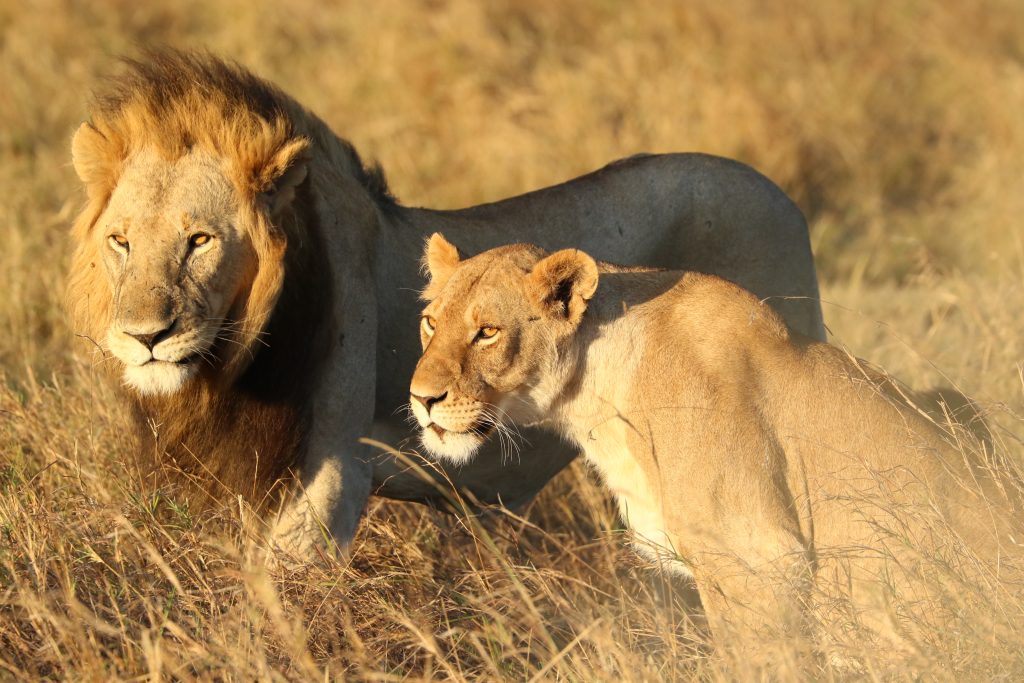
Lion and lioness in Kenya’s Masai Mara
The figures are striking. Long-term monitoring by the Mara Predator Conservation Programme has recorded lion densities of up to 25 to 30 per 100 square kilometres in the reserve’s prime areas, among the highest anywhere in Africa. Across the wider Mara ecosystem, including its conservancies, estimates put the lion population at 800 to 1,000 individuals. On the Tanzanian side, the Serengeti proper is thought to hold several thousand lions, very likely the largest population left on the continent.
What makes this figure meaningful for a traveller is not the statistic itself, but what it means on the ground. A pride sighting in the Mara is not a matter of luck. It is closer to routine, and a skilled guide will often know which pride is where before the vehicle has left camp.
Leopards: the private specialists
Leopards have always resisted the easy narrative that safari marketing likes to tell. They are solitary, largely nocturnal and instinctively private, which is exactly why sighting one feels like such an achievement.
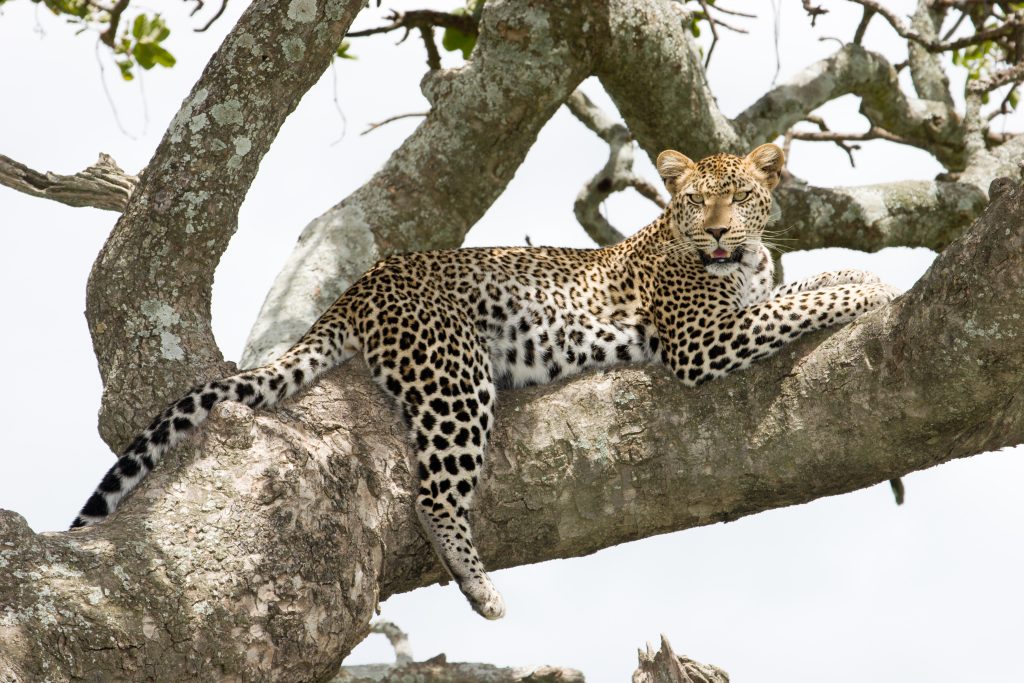
Leopard. Photo: Tanzania Tourism Board
The Serengeti’s Seronera Valley, in the heart of the central plains, has one of the best leopard-sighting records anywhere in Africa. Its fig trees, riverine forest and rocky outcrops give the species precisely the cover it favours. The resident leopards here are accustomed enough to vehicles to largely conduct their business without disturbance. The Mara tells a similar story, with the river forest along the Mara and Talek rivers supporting a healthy, well-studied leopard population. A 2025 camera-trap study across the ecosystem found that leopard distribution is shaped directly by the presence of lions and hyenas, a reminder that this is a genuinely intact predator community, not a landscape managed down to a single headline species.
For a traveller, the practical takeaway is patience. Leopard sightings reward slower mornings and guides who know which riverine stretch to work quietly rather than which open plain to race across.
Cheetahs: built for the open ground
Cheetahs need what lions and leopards do not, wide open ground with clear sightlines for the high-speed chases that define them. The southern Serengeti’s short grass plains around Ndutu are considered among the finest cheetah watching ground in Africa, the terrain built almost perfectly for the species’ hunting style.
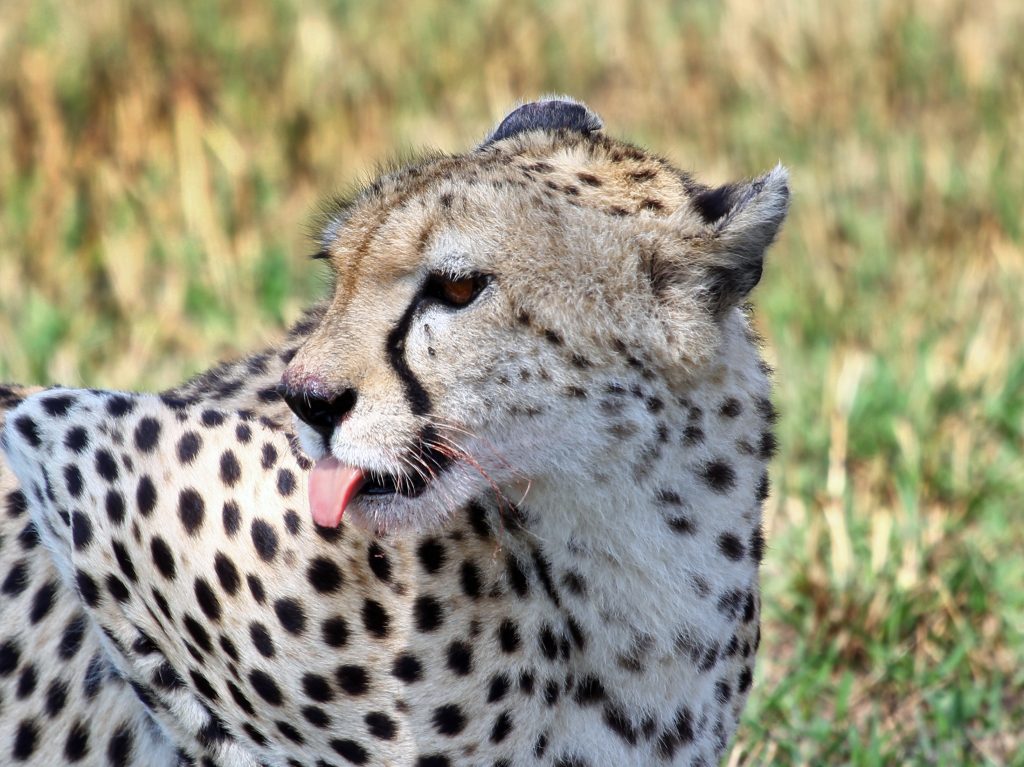
Cheetah photographed in the Masai Mara.
The Mara’s conservancies play an equally important role. Researchers have recorded cheetah densities of around 1.27 adults per 100 square kilometres in parts of the greater Mara, a modest figure in absolute terms but genuinely high by African standards, and one that marks this landscape as one of the species’ most important remaining strongholds. Cheetahs have vanished from roughly 91 per cent of their historic range across Africa, which makes every reliable sighting ground worth protecting and worth valuing as a traveller.
The conservancy model: why it matters to a sighting
None of this density would translate into a good guest experience without the way the land is managed. Since the late 1990s, a network of private conservancies has grown up around the edges of the Maasai Mara National Reserve, each one leased directly from Maasai landowners under long-term agreements.
The effect on a game drive is immediate. Where the national reserve can see a dozen vehicles gather at a single sighting during peak season, conservancies such as Mara North and Naboisho cap both bed numbers and vehicle density, often to a single vehicle per sighting. Night drives and off-road tracking, both prohibited inside the reserve itself, are permitted within conservancy land, opening up leopard and cheetah encounters that are not possible elsewhere in the ecosystem.
The arrangement benefits more than the guest experience. Lease payments now support more than 14,000 Maasai landowners across the wider Mara, funding schools, healthcare and livestock compensation schemes. Roughly a third of Kenya’s wildlife lives outside formally protected reserves altogether, which makes this community-led model, rather than fencing or exclusion, the single most important reason predator numbers here have held steady while they have declined elsewhere on the continent.
Staying at a camp within one of these conservancies means each morning begins with fewer vehicles, more off-road access, and guides who often know a pride’s movements before first light.
Beyond the Mara and Serengeti
While the Serengeti-Mara carries the reputation, several other East African reserves add genuine depth to a big cat itinerary. Samburu, in Kenya’s north, offers riverine forest along the Ewaso Nyiro river that supports its own resident leopard population, alongside species found nowhere else in East Africa. Amboseli, better known for its elephant herds against the backdrop of Kilimanjaro, holds resident lion prides that have been studied for decades by conservation groups working alongside Maasai communities.
Ngorongoro Crater, in Tanzania, deserves a mention of its own. Its enclosed caldera holds one of the highest lion densities recorded anywhere in Africa, though the crowds it draws make it better suited to a short, sharp highlight within a longer itinerary than a centrepiece in its own right.
When to travel
Big cat sightings hold up well across most of the year since predators follow prey rather than season alone. That said, the dry months from June to October bring wildlife into tighter concentration around remaining water sources, which tends to mean easier viewing for all three species. This period overlaps with the wildebeest migration’s river crossings, which draw predators of their own accord and can make for extraordinary, if busier, viewing in the northern Mara and Serengeti. The calving season in the southern Serengeti’s short grass plains, from January to March, is worth a special mention for cheetahs in particular. Newborn wildebeest and gazelle calves draw predators onto open, easily watched ground, and this period is often quieter than the peak migration months.
Why Somak?
We have been building journeys through this landscape since 1968, when the idea of linking several destinations into a single, considered itinerary was still new to the industry. Nearly six decades on, the same principle guides every East Africa journey the company designs: understand the ecosystem, work with the people who protect it, and let the wildlife do what it does best without unnecessary disturbance. For a traveller weighing up where to see the big cats properly, that history matters. East Africa was the benchmark before the word ‘safari’ was fashionable, and the numbers, the terrain and the conservation model all suggest it still is.
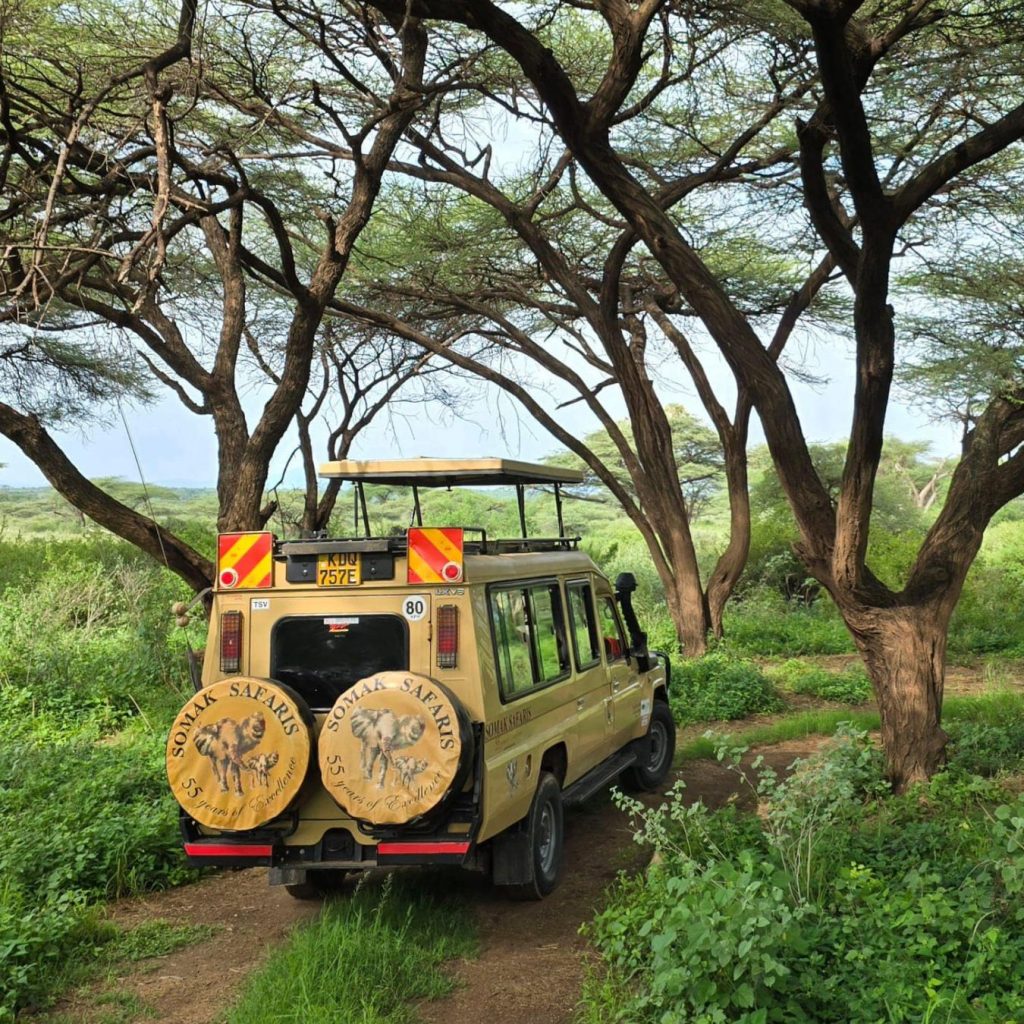
A classic safari vehicle
Contact one of our travel experts to start planning your next Big Cat safari to East Africa. Call 020 8423 3000 or email at holidays@somak.co.uk.
Contact
Somak House
Harrovian Business Village
Bessborough Road
Harrow On the Hill
HA1 3EX
Tel: +44 20 8423 3000
Email: info@somak.com
Opening times
| Mon - Fri | : | 9am to 6pm |
| Sat - Sun | : | Closed |