
Beyond the Safari: The Extraordinary Marine Wildlife of East and Southern Africa, Sri Lanka and India
February, 2026
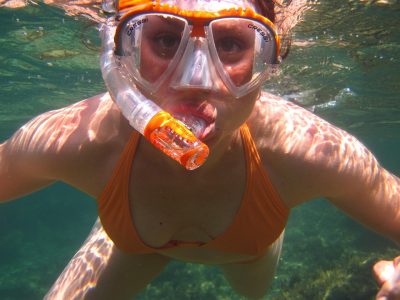
Most people who travel to East Africa, Southern Africa, Sri Lanka, or India arrive with land-based wildlife in mind. Lions on the Serengeti. Elephants in Amboseli. Leopards in Yala. Tigers in Ranthambore. But slip beneath the surface of the Indian Ocean or step onto a whale-watching boat at dawn, and you’ll discover a parallel world every bit as dramatic, every bit as wild, and far less crowded with cameras. These coastlines and island waters host some of the planet’s most extraordinary marine encounters, and they’ve barely scratched the surface of the attention they deserve.
East Africa: Safari meets the sea
Kenya and Tanzania have long understood that their appeal extends beyond the savannah. The Indian Ocean coastline stretching from northern Kenya through Tanzania and down to Mozambique supports over 350 species of fish, 40 types of coral, five species of sea turtle, and 35 species of marine mammals, including dolphins, whales, and the elusive dugong. It’s an underwater safari in all but name.
Kenya’s coastal parks
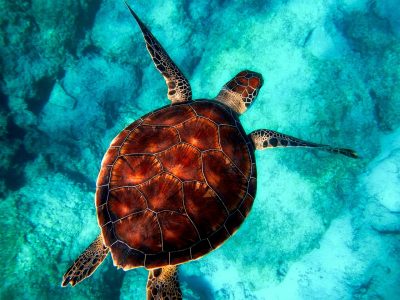
Kenya’s most rewarding marine destination sits at the country’s southern tip, where Kisite-Mpunguti Marine National Park, established in 1978 near Shimoni, protects four small islands surrounded by pristine reef. Around 250 documented fish species share the water with 70 resident dolphins, green and hawksbill turtles, and manta rays whose wingspans can stop divers mid-stroke. Humpback whales pass through between June and September on their annual migration, and whale sharks appear between October and February, gliding through the plankton-rich currents with characteristic unhurried grace.
Further north, Watamu Marine National Park delivers healthy coral gardens, resident green turtles nesting on protected beaches, and that peculiar East African gift of combining wildlife density with solitude. The community turtle watch initiative here is one of those encounters that quietly recalibrates your sense of what travel is for: walking newly hatched turtles down to the water’s edge under a dark sky, watching them find the ocean for the first time.
Tanzania and Zanzibar
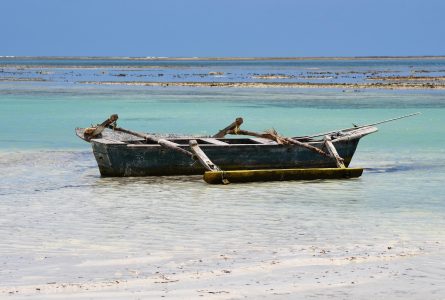
Off the southern coast of Tanzania, Mafia Island sits within a marine park that protects 460 species of tropical fish, five turtle species, dugongs, and one of East Africa’s most reliable whale shark aggregations. Between October and March, these gentle filter feeders gather to feast on plankton upwellings, making Mafia one of the region’s finest spots to snorkel alongside the largest fish on the planet.
The Mnemba Atoll of Zanzibar offers something different: a circular reef of exceptional health where manta rays and eagle rays patrol deeper currents, reef sharks cruise coral walls festooned with gorgonians, and between November and April, humpback whales appear with enough regularity to make sightings a reasonable expectation rather than a lucky bonus.
Mozambique: Where the giants gather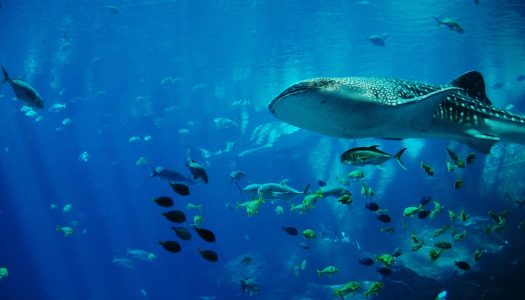
Mozambique‘s marine credentials are frankly staggering. Tofo Beach near Inhambane has become globally renowned as one of the most reliable destinations on Earth to dive with both whale sharks and manta rays, the latter performing their hypnotic underwater ballet through warm currents between October and May. Humpback whales arrive between June and November to mate and calve in the warm Indian Ocean, their presence close enough to shore that encounters from small boats feel almost intimate.
The Bazaruto Archipelago, further north, shelters one of the last viable dugong populations in East Africa, an animal so rarely seen elsewhere that a sighting feels almost mythological. Loggerhead and leatherback turtles journey thousands of kilometres each year between November and February to nest on Mozambique’s largely undisturbed beaches, their tracks in the sand evidence of journeys that dwarf any human adventure.
South Africa: Where cold oceans deliver drama
South Africa operates on different terms. The cold, nutrient-rich waters of the Western Cape support marine life in concentrations that warmer tropical seas can’t match, and the encounters available here have an edge of wildness that’s hard to replicate.
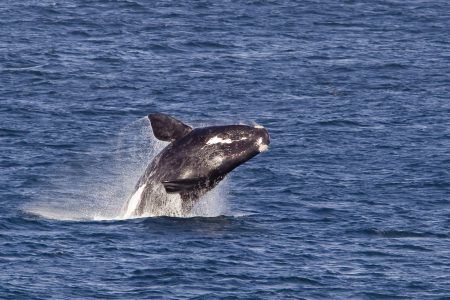 Hermanus, on the Whale Route east of Cape Town, is widely regarded as the world’s finest land-based whale-watching destination. Between July and November, southern right whales arrive in Walker Bay to calve, their massive forms rolling and breaching close enough to shore that binoculars become almost redundant. The town employs a whale crier whose kelp horn announces each sighting, a charming anachronism in an experience that needs no embellishment.
South Africa’s extraordinary coastline hosts some 15% of all marine coastal species on Earth. A marine encounter here feels like stepping into an untapped wildlife reserve rather than a tourist attraction. The KwaZulu-Natal coast around St Lucia offers some of Africa’s highest recorded boat-based whale sightings. Its waters also host leatherback, loggerhead, hawksbill, and green turtles. For the genuinely adventurous, the annual Sardine Run along the Eastern Cape coast between May and July draws dolphins, sharks, whales, and seabirds into a feeding frenzy of almost prehistoric scale.
Sri Lanka: The island sat astride a whale highway
Sri Lanka’s marine reputation rests on a single extraordinary fact: the island sits directly on one of the world’s greatest cetacean migratory routes, first documented by British marine biologist Charles Anderson in 1999. Blue whales and sperm whales migrate annually between the Bay of Bengal and the Arabian Sea via Sri Lanka’s southern coast, bringing these oceanic giants into waters close enough to shore that a morning boat trip from Mirissa can deliver rewarding encounters.
Blue whales hold a particular significance here. The largest animals ever to have existed on Earth, reaching up to 30 metres in length, are seen with a frequency off Sri Lanka’s south coast that ranks the island among the top two or three countries globally for sightings. Between November and April, tours operating from Mirissa report encounters on 95% of departures. Sperm whales, fin whales, Bryde’s whales, and spinner dolphins complete a cast that makes any morning on the water astonishing.
The northeast coast around Trincomalee offers a different experience: calmer and less visited, with sperm whales as the main attraction between March and May alongside blue whales, fin whales, and the occasional orca. The BBC’s Blue Planet documentary filmed its landmark sperm whale gathering sequence here, just off Trincomalee’s coast.
Five species of sea turtle nest along Sri Lanka’s beaches, with green turtles, hawksbills, loggerheads, olive ridleys, and leatherbacks all present in surrounding waters. Rekawa Beach near Tangalle and the national park at Bundala provide protected nesting grounds where patient night-time visits occasionally reward with the sight of massive females hauling themselves ashore to lay eggs under the cover of darkness.
For divers and snorkellers, Trincomalee’s Pigeon Island National Park delivers coral gardens and tropical fish within a kilometre of shore, whilst Hikkaduwa and Unawatuna offer accessible reef diving with moray eels, lionfish, reef sharks, and the kind of fish diversity that reminds you why the Indian Ocean earned its reputation.
India: Where whales and turtles meet ancient coastlines
India’s extensive coastline, stretching from the Arabian Sea to the Bay of Bengal, offers marine encounters that remain remarkably underexplored compared to the country’s land-based wildlife fame.
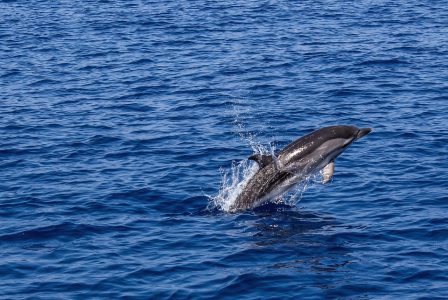
The waters around the Andaman and Nicobar Islands host pristine coral reefs largely untouched by the pressures affecting reefs elsewhere, where dugongs graze on seagrass meadows, hawksbill turtles navigate between feeding and nesting grounds, and manta rays patrol the deeper channels. The Lakshadweep Islands in the Arabian Sea offer similar isolation with exceptional diving amongst coral atolls of extraordinary health.
India’s west coast also hosts humpback dolphins, spinner dolphins, and occasional whale shark encounters. The nesting beaches of Odisha on the Bay of Bengal witness one of nature’s most dramatic spectacles: the mass arrival of olive ridley turtles during the Arribada, when hundreds of thousands of females come ashore simultaneously to nest, turning entire beaches into a moving, heaving carpet of ancient life.
Planning your marine adventure
The beauty of these destinations is how naturally they pair with existing travel plans. A Kenyan safari extends effortlessly to the coast at Watamu or Diani Beach. A Tanzania wildlife circuit concludes perfectly with a few days on Zanzibar or Mafia Island. Many South African trips already include Hermanus and the Garden Route. Sri Lanka’s compact size means the whale-watching coast is never more than a few hours from anywhere on the island.
The best seasons vary by destination, but broadly the Indian Ocean’s calmer months between October and April favour East African diving and Sri Lanka’s whale watching. South Africa’s whale season runs from July to November. Whatever your itinerary, the marine world waiting beneath these surfaces offers encounters with creatures of such extraordinary scale that even the most seasoned safari veteran tends to come away quietly astonished.
The land may have lions. But the sea has blue whales.
If you’re ready to plan an unforgettable journey to witness these natural spectacles—or simply explore the beautiful landscapes that host them—let Somak Luxury Travel be your guide. Call our reservations hotline on +442084233000. Our travel experts will share bespoke options that will place you right at the heart of the action in Africa or Sri Lanka. Sign up for our weekly Somak Luxury Travel newsletters for the latest trending travel offers and editorials by clicking on this link: Newsletter Sign Up
Contact
Somak House
Harrovian Business Village
Bessborough Road
Harrow On the Hill
HA1 3EX
Tel: +44 20 8423 3000
Email: info@somak.com
Opening times
| Mon - Fri | : | 9am to 6pm |
| Sat - Sun | : | Closed |