
The Kruger National Park Big 6 Birds
February, 2026
Most travellers arrive in Kruger National Park dreaming of lions, elephants and leopards. The Big Five dominate safari wish lists, and for good reason. But while eyes scan the plains for powerful mammals, another elite group quietly captures hearts in unexpected ways. The Kruger Big 6 Birds celebrate six of the park’s most iconic avian species, chosen for their size, beauty, rarity and emotional impact.
These birds are not just striking to look at. They tell deeper stories about wilderness, conservation and the rhythms of the bush. Some soar high above open savannah, others stride through grasslands, stalk riverbanks or glide silently through forested waterways at dusk. Together, they add texture and atmosphere to every safari moment, rewarding those who slow down, look up and listen. Birdlife in Kruger is not a niche interest. It is woven into the very fabric of the experience.
Why Kruger is one of the world’s greatest birding destinations
Kruger National Park spans an extraordinary range of habitats, from open plains and dry woodlands to riverine forests and wetlands. This diversity creates ideal conditions for birdlife, making the park one of Africa’s richest birding destinations. Over 500 bird species have been recorded here, from tiny sunbirds and bee-eaters to massive vultures and eagles that rule the skies.
What makes birding in Kruger so special is how seamlessly it fits into the safari experience. Birds are everywhere, whether you are pausing at a river crossing, driving open roads at sunrise or relaxing at camp. The cry of a fish eagle drifting across water. The shadow of wings overhead. A flash of colour in roadside bushes. Witnessing this natural beauty often becomes as memorable as any mammal sighting. Even travellers who arrive focused on big game often leave talking about birds they never expected to notice, let alone love.
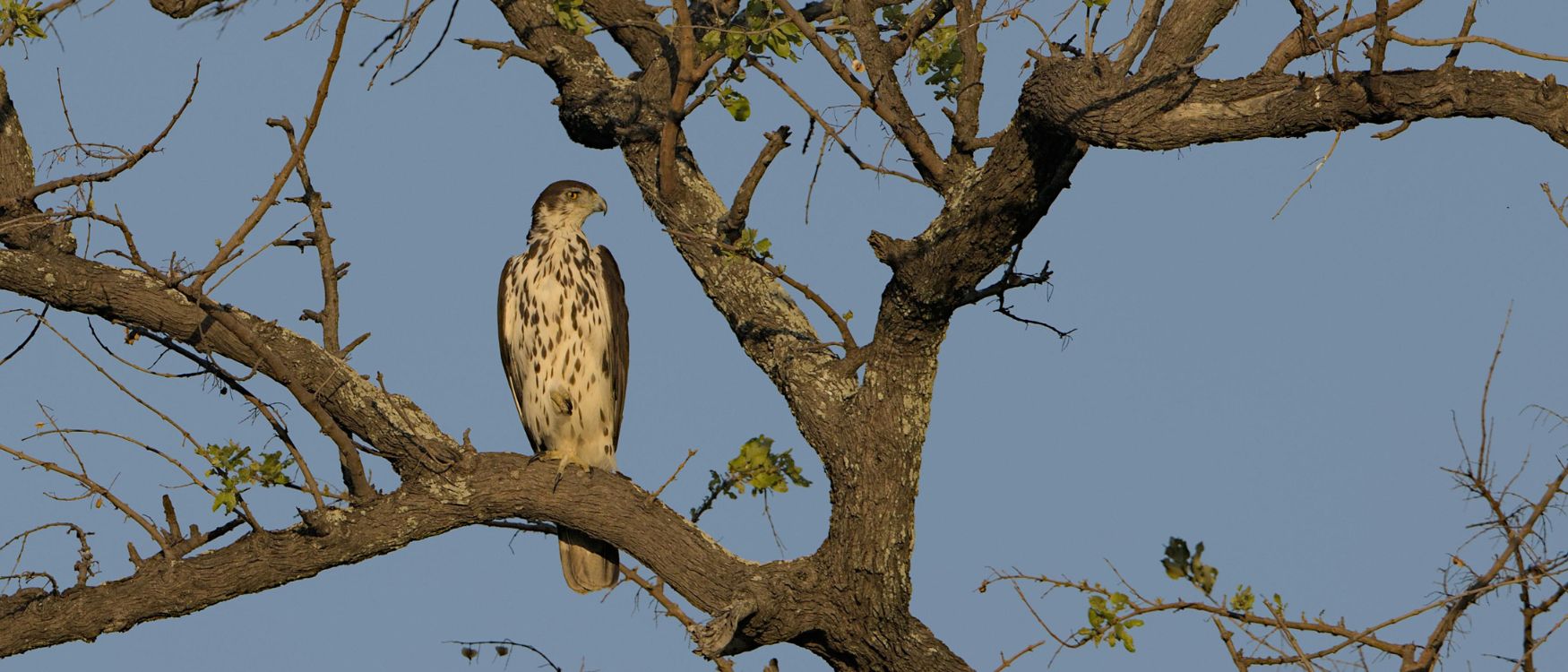
The Kruger Big 6 Birds celebrate six of the park’s most striking, recognisable and visually powerful avian species. They are large, bold and deeply tied to wild landscapes, mirroring the Big Five not necessarily in fame, but in the way they stop you in your tracks when you encounter them.
These birds were selected not only for their charisma. They are also mostly restricted to protected wilderness areas. Many face habitat loss, slow breeding cycles and conservation pressure, making sightings especially meaningful.
Five are relatively easy to spot, while one is famously elusive, adding an element of challenge and excitement. Together, they invite visitors to experience the bush from a new perspective, one that looks beyond the horizon and into the skies, rivers and grasslands that define this remarkable landscape.
The Big 6 Birds of Kruger National Park
Kori Bustard: The heavyweight of the skies
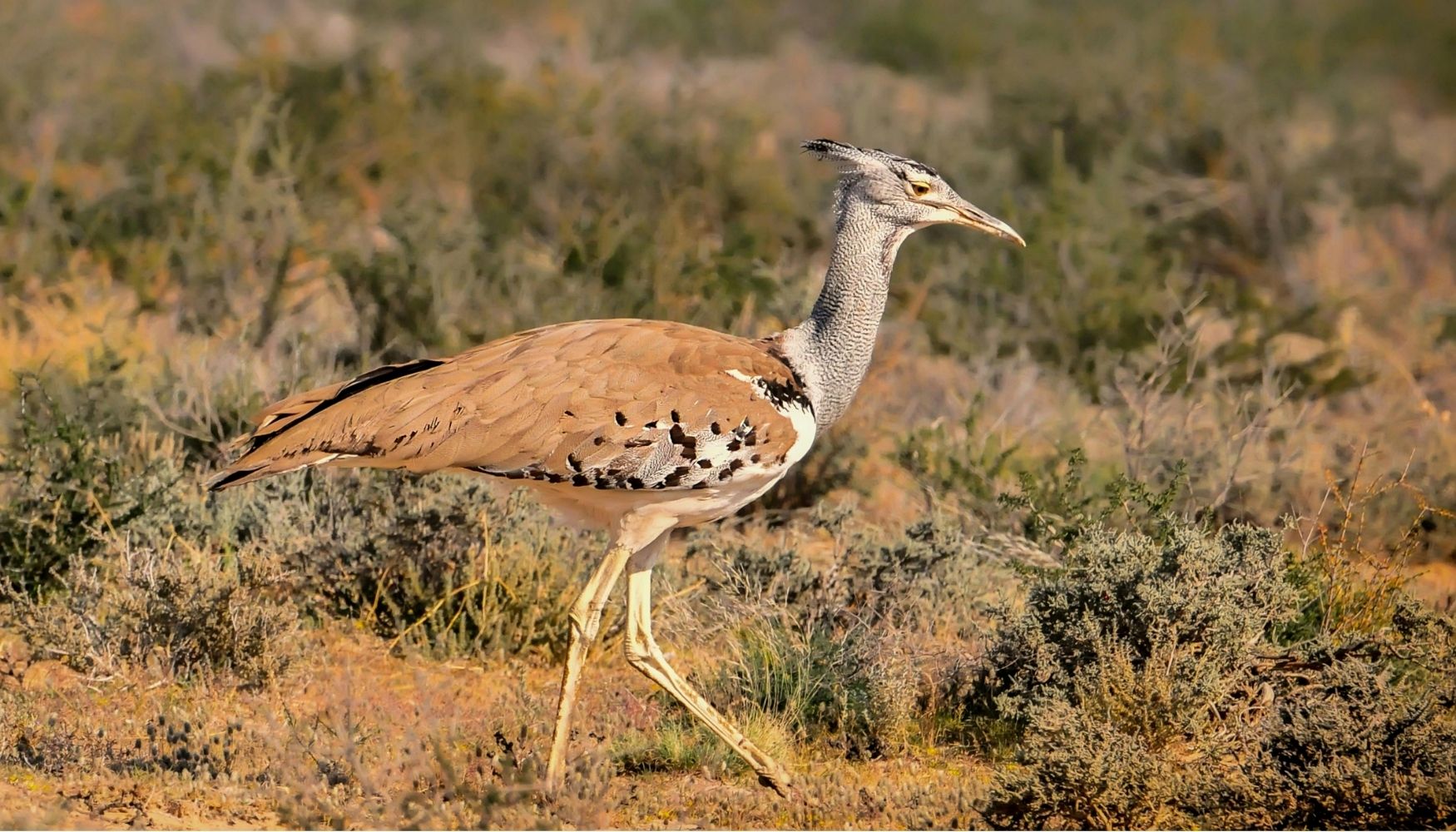
The kori bustard is often described as the world’s heaviest flying bird, and encountering one in the open savannah feels quietly monumental. With its tall stance, thick neck and earthy plumage, it moves through grasslands with deliberate calm, scanning for insects, lizards and small mammals. Despite its size, it blends surprisingly well into the bush, often spotted only when it shifts or takes flight.
When it does lift into the air, the power of its wings feels almost improbable, carrying its bulk skyward with steady grace. In Kruger, kori bustards are most commonly seen in open grasslands and lightly wooded areas, where their presence feels like discovering something ancient and enduring. A giant of the plains that demands attention through stillness rather than speed.
Martial Eagle: Africa’s most powerful hunter
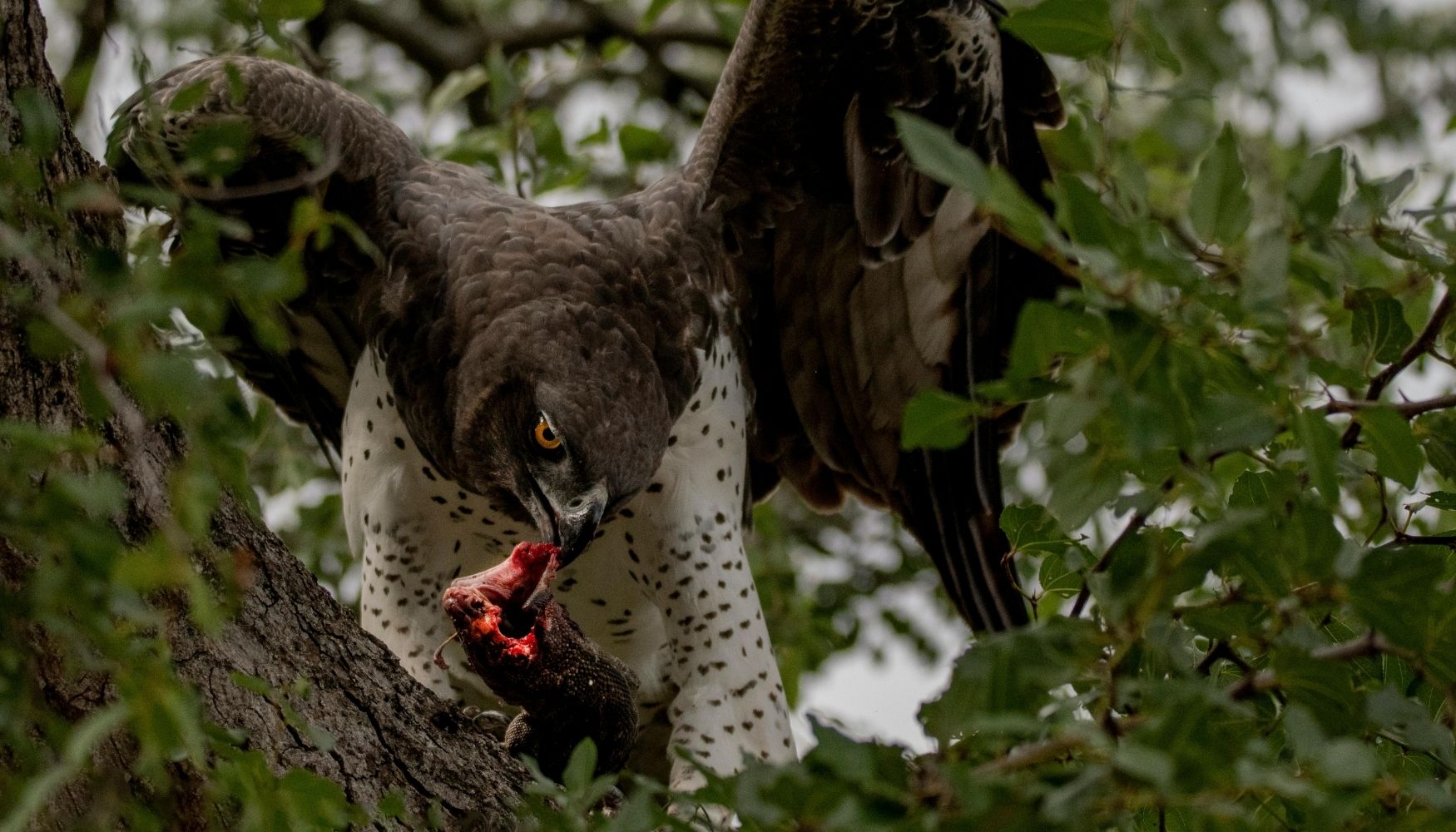
The martial eagle is Africa’s largest and most powerful eagle, a true apex predator of the skies. With dark wings, a speckled white belly and a piercing gaze, it carries an unmistakable authority. Capable of hunting prey as large as small antelope and monkeys, it strikes with extraordinary speed and force, making it one of the most impressive hunters in the African wilderness.
Despite its dominance, the martial eagle is classified as vulnerable, with populations declining across much of its range due to habitat loss and persecution. Kruger offers a vital refuge, and seeing one perched high above the savannah or soaring effortlessly on thermals feels both awe-inspiring and deeply meaningful, a reminder of the importance of protected wild spaces.
Lappet-Faced Vulture: The undertaker of the bush
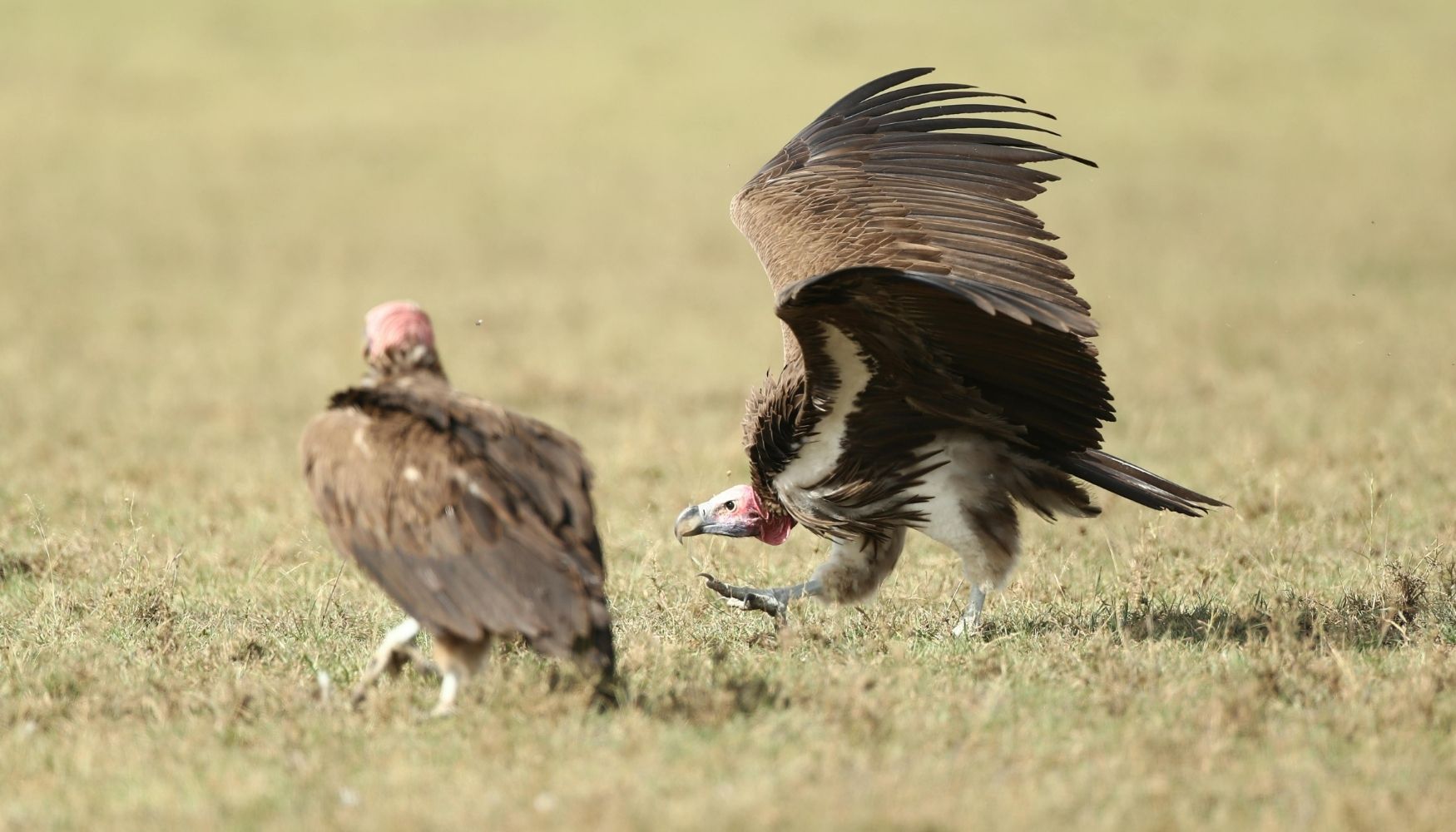
With a wingspan approaching three metres, the lappet-faced vulture is Africa’s largest scavenger and one of its most striking birds in flight. Its bare pink head, powerful hooked beak and immense size give it an almost prehistoric appearance. Often seen circling high above the plains, it searches for carcasses that sustain not only itself, but entire communities of scavengers.
These birds play a crucial ecological role as the bush’s clean-up crew, preventing the spread of disease by rapidly removing carrion. Sadly, they are endangered across much of Africa due to poisoning and habitat loss. In Kruger, they soar freely over vast wilderness, and witnessing one descend from the sky or glide overhead is both humbling and unforgettable.
Saddle-Billed Stork: The jewel of the wetlands
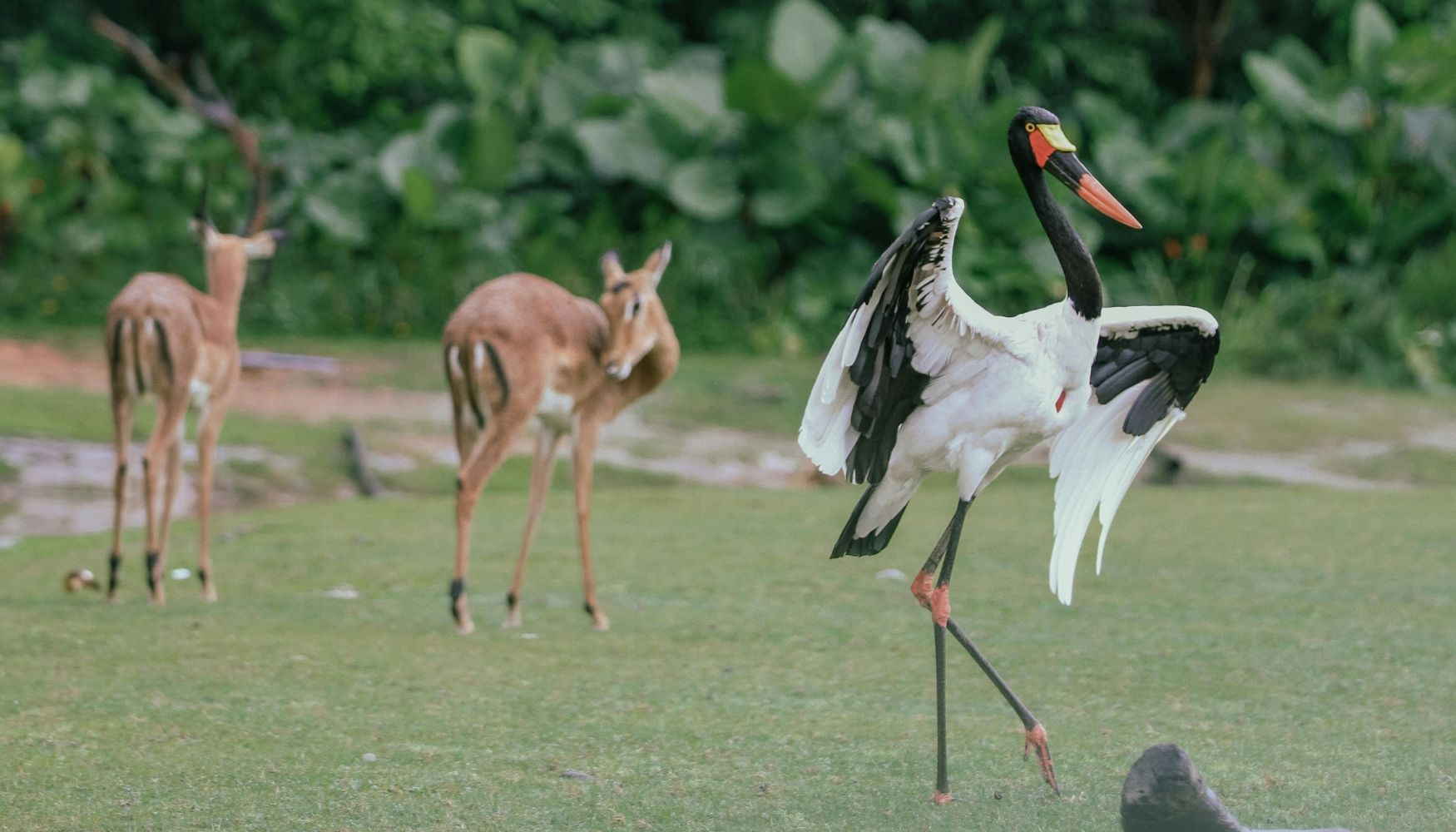
Few birds in Africa rival the saddle-billed stork for sheer elegance and visual impact. Standing up to 1.5 metres tall, with bold black and white plumage and a striking red, black and yellow bill, it looks almost sculptural as it stalks through shallow water. Its movements are slow, deliberate and graceful as it hunts fish, frogs and aquatic creatures.
Despite being regularly seen in Kruger, saddle-billed storks are surprisingly rare breeders, with only a handful of breeding pairs in the entire park. This contrast between visibility and vulnerability makes each encounter more special. Seeing one reflected in still water or silhouetted against a riverbank is one of Kruger’s most beautiful and memorable wildlife moments.
Southern Ground Hornbill: The voice of the savannah
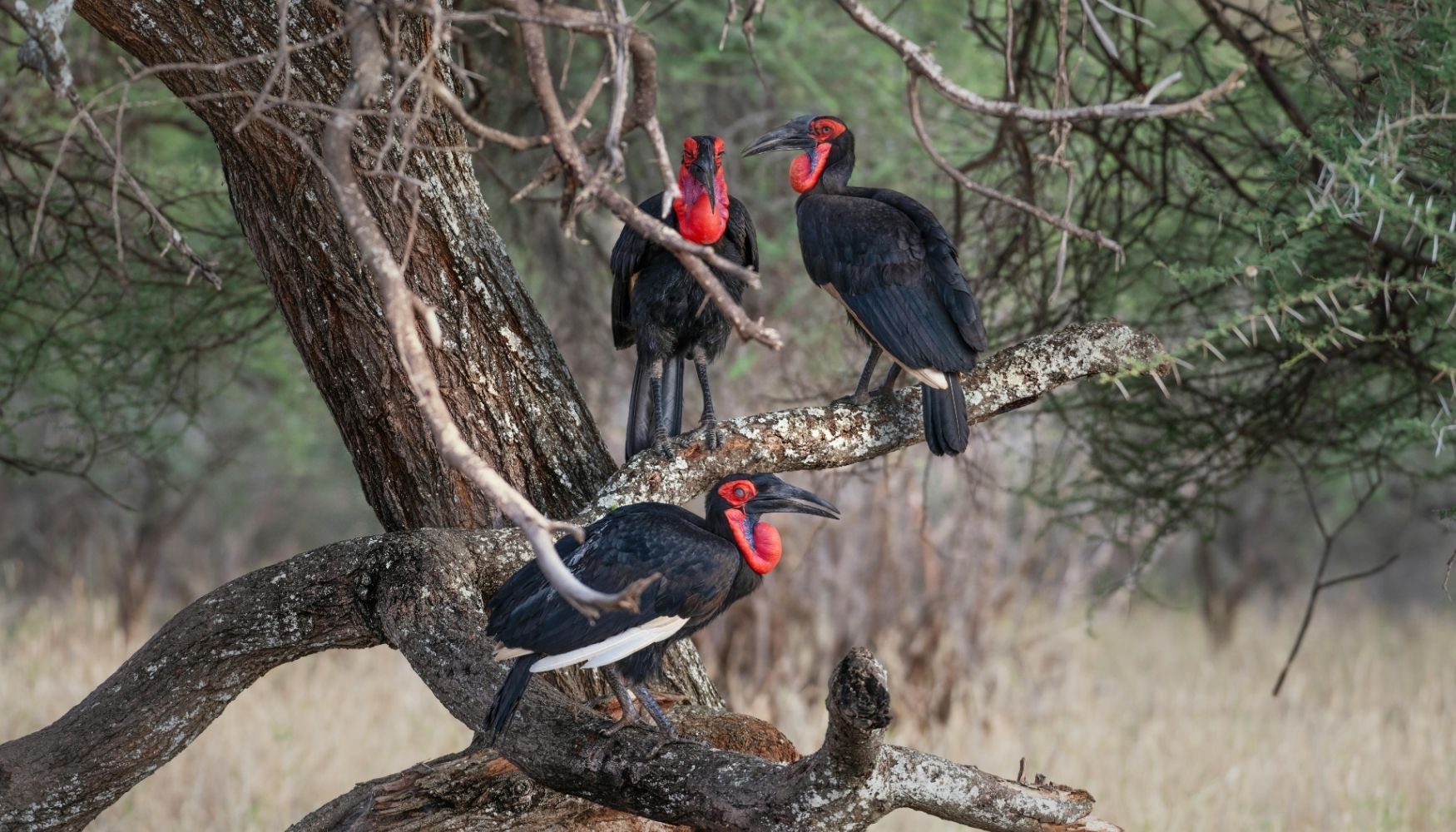
The southern ground hornbill is one of Africa’s most charismatic birds, both visually and vocally. Tall, black-feathered and crowned with vivid red facial skin, it strides across grasslands and woodland edges like something from another age. Unlike most hornbills, it spends much of its time on the ground, foraging for insects, reptiles, frogs and small mammals.
Its deep booming calls echo across the savannah at dawn, sometimes mistaken for distant lion grunts. Classified as vulnerable due to habitat loss and slow breeding rates, ground hornbills survive largely thanks to protected areas like Kruger. Watching a family group move purposefully through the bush feels like stepping into a living echo of Africa’s ancient wilderness.
Pel’s Fishing Owl: The holy grail of Kruger birding
A rare and elusive species that even experienced guides seldom see. With rich reddish-brown plumage, dark facial markings and intense yellow eyes, it is a striking bird when glimpsed, usually perched silently above slow-moving rivers or gliding low over water at dusk.
Unlike most owls, it feeds mainly on fish, snatching prey from the surface with powerful talons under the cover of darkness. In Kruger, it is most often found along major river systems such as the Levuvhu, Limpopo and Olifants. Spotting one is like uncovering a secret of the bush, a fleeting moment of quiet magic certain to linger long after the sighting ends.
When and how to spot the Kruger Big 6 Birds
Early mornings and late afternoons offer the best chances of spotting the Big 6, when birds are most active and light conditions are soft. Open savannah favours kori bustards and martial eagles, while rivers and wetlands attract saddle-billed storks and Pel’s fishing owls. Ground hornbills roam grasslands and woodland edges, and lappet-faced vultures soar across vast open skies.
Patience is key. Many sightings happen between major mammal encounters, during quiet stretches of road or at waterholes. Rangers and guides will know where particular species have been seen recently, and staying alert to movement and calls can turn an ordinary drive into something unforgettable.
Discovering a New Side of Kruger
Kruger National Park may be world-famous for lions, elephants and leopards, but its skies, rivers and plains hold another extraordinary cast of wildlife. From the towering kori bustard to the elusive Pel’s fishing owl, the Kruger Big 6 Birds add depth, drama and wonder to every safari, revealing stories of power, patience, beauty and survival.
Birdlife slows the safari experience in the best possible way, encouraging travellers to notice details, listen to the bush and connect more deeply with the landscapes around them. Whether you are a seasoned birder or visiting South Africa for the first time, these six remarkable species offer a richer, more immersive way to experience Kruger.
Plan your safari with birding in mind and discover the full story of Kruger’s wilderness. Somak Luxury Travel is ready to tailor-make your holiday to your interests and dreams. Enquire now. Let us guide you to your ideal getaway.
Contact
Somak House
Harrovian Business Village
Bessborough Road
Harrow On the Hill
HA1 3EX
Tel: +44 20 8423 3000
Email: info@somak.com
Opening times
| Mon - Fri | : | 9am to 6pm |
| Sat - Sun | : | Closed |