Dreaming of Botswana: It’s a Kind of Magic
July 2026
There is a particular kind of magic that belongs only to Botswana. It’s the sound of water moving through reeds where, weeks earlier, there was only sand. An elephant standing knee-deep in a floodplain that has not held water in years. The silence, broken only by the dip of a paddle or the distant call of a fish eagle. This year, that magic is set to be more vivid than most, because 2026 is shaping up to be one of the most exceptional flood seasons the Okavango Delta has seen in decades.
The journey of a flood
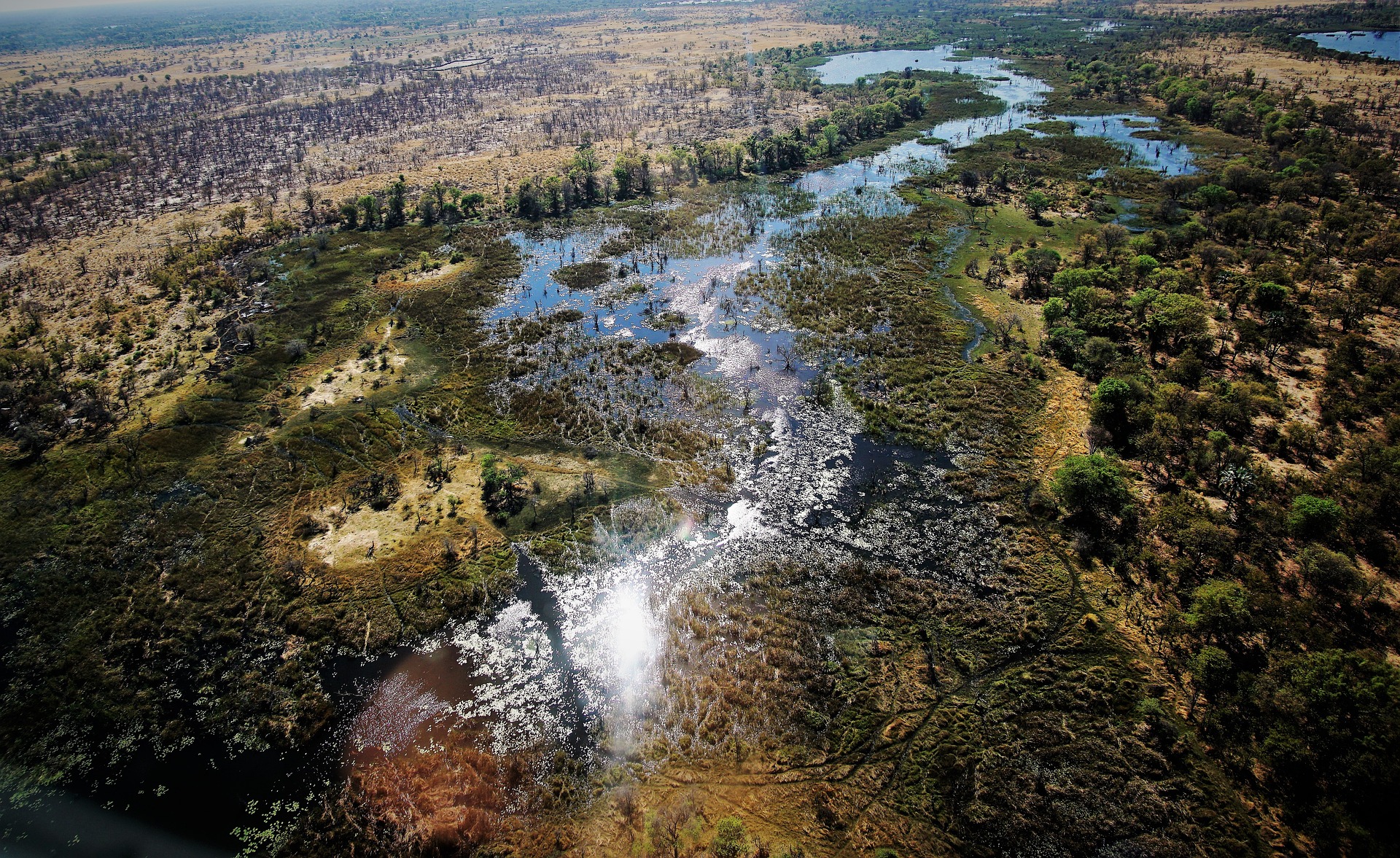
To understand why this year matters, it helps to understand how the Delta works. Most rivers flood during the local rainy season. The Okavango does the opposite. Its waters peak in the middle of the dry season, when rainfall in Botswana has stopped entirely, and the surrounding Kalahari is at its most parched. It is this paradox, more than anything else, that makes the Delta one of the most extraordinary wetland systems on the planet.
The story begins over a thousand kilometres to the northwest, in the highlands of Angola. Summer rains falling between November and March feed the Cubango and Cuito rivers, which merge to form the Okavango. That water then makes a long, slow journey south, through the Zambezi Region and into Botswana at the Panhandle, the narrow upper section of the Delta. The whole process can take up to six months from the first rains falling in Angola to the water reaching the furthest edges of the Delta. By the time it arrives, it is arriving into what should, by rights, be the dry season.
What happens next is extraordinary. Dry floodplains fill with clear water. Channels that were bone dry weeks earlier become deep enough for mokoros and motorboats. Desert vegetation gives way to lush, waterlogged grassland, and wildlife concentrates in enormous numbers along the advancing flood front.
 The blessing of rain in Botswana
There is a small but telling detail in the language of the place itself. Rain is something people in Botswana never take for granted. ‘Pula’, the Setswana word for rain, is also the name of the national currency and a common expression of blessing. This year, there has been a great deal to bless.
Every Okavango flood tells a slightly different story, and this year’s is a particularly good one. Rainfall in the Angolan highlands has been exceptional, sending an above-average flood pulse south. That alone would be enough to make for a strong season. What makes 2026 unusual is what was already happening on the ground in Botswana before that water ever arrived.
Local rainfall across the region has been well above average, with some parts of the Okavango receiving more than 1,000mm compared to a typical annual average figure of approximately 450mm. The soil was already saturated. The channels were already holding water. So when the Angolan flood pulse reached the Delta, it had nowhere to rush through. Instead, it has spread slowly, widely and deeply.
The effect is a flood of unusual breadth and persistence. Waterways are filling earlier than usual. Channels that have lain dry for years are moving again. Areas of the Delta are holding water levels comparable to last year’s peak, even before this year’s main pulse has fully arrived. For a system that has faced a run of drier, more uneven years, this kind of season offers a genuine sense of renewal.
Life on the water in Botswana
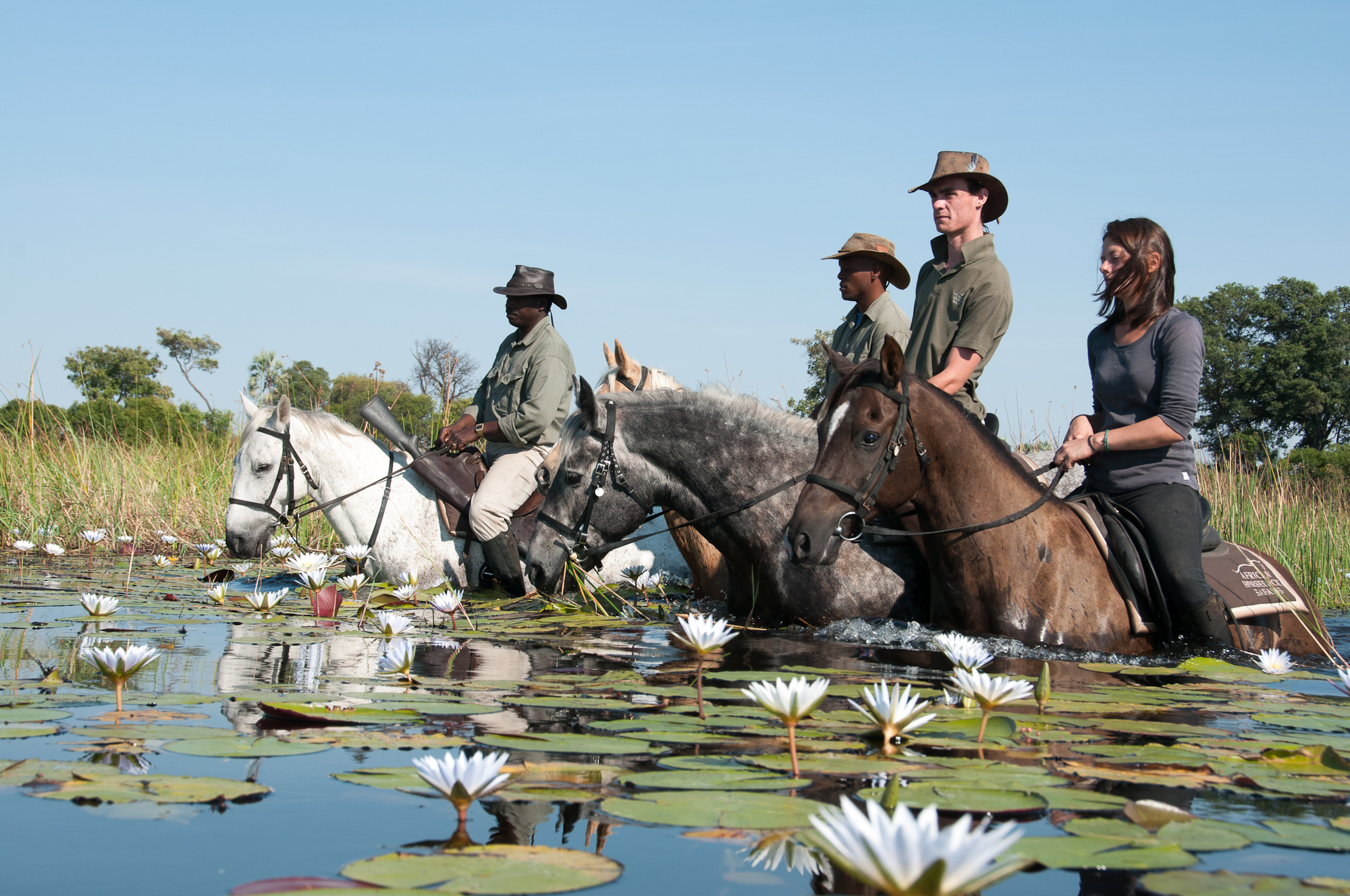
For travellers, all of this translates into something rare. Higher water levels mean deeper channels and longer mokoro journeys, carrying visitors further into parts of the Delta that are inaccessible in drier years. Wildlife responds in kind, drawn to the water’s edge in great numbers as floodplains reconnect and grazing improves. Elephants, buffalo, lions, leopards, wild dogs and the shy, water-loving sitatungas all depend on this rhythm of flood and retreat.
A morning on the water in a season like this might begin in near silence, drifting by mokoro through papyrus-lined channels as the sun comes up, and end on foot, tracking across an island that would have been unreachable a year ago. It is a landscape defined, quite literally, by movement.
Moremi Game Reserve
Within the Delta itself sits Moremi, one of Africa’s most celebrated game reserves and the first in the region to be established through the initiative of local communities rather than colonial administration. Moremi occupies the eastern side of the Okavango, spanning both permanent water and drier mopane woodland, which gives it a rare versatility. Few reserves in Africa allow such a shift between landscapes within a single day, from flooded lagoon to open plain to dense woodland.
This mix of habitat is precisely why Moremi holds such a reputation among safari guides. The permanent waters of the Delta support boating and mokoro excursions. The drier ground opens up for game drives and, on the private concessions bordering the reserve, walking safaris and night drives that are not permitted within the national park itself. Big cats are a particular draw, with strong populations of lions and leopards, as well as some of Botswana’s most reliable wild dog sightings.
In a season like 2026, Moremi stands to benefit twice over. The flood extends further into the reserve’s channels and lagoons than in a typical year, while the surrounding land, already lush from strong local rainfall, holds onto its grazing and its game for longer. It is, in many ways, the Delta’s story in miniature, water and wildlife, movement and stillness, held together in one place.
Botswana Beyond the Delta
North of the Delta lies Chobe National Park, home to one of the greatest concentrations of elephants found anywhere on the continent. Herds gather along the Chobe River in numbers that can feel almost prehistoric, particularly in the drier months when the river becomes the only reliable water source for miles. A boat safari along the Chobe at sunset, with elephants moving along the banks and hippos surfacing nearby, remains one of the great set pieces of African travel.
To the west of Chobe, the Linyanti and Savuti regions offer a different rhythm altogether. These areas are wilder and considerably quieter, with far fewer vehicles and a strong emphasis on tracking over ticking off sightings. The Savuti Marsh has its own peculiar history of vanishing and reappearing over the decades, and the region as a whole is known for excellent predator sightings, including some of the healthiest lion prides in southern Africa.
Sunset Makgadikgadi Pans
The Kalahari: Salt and silence
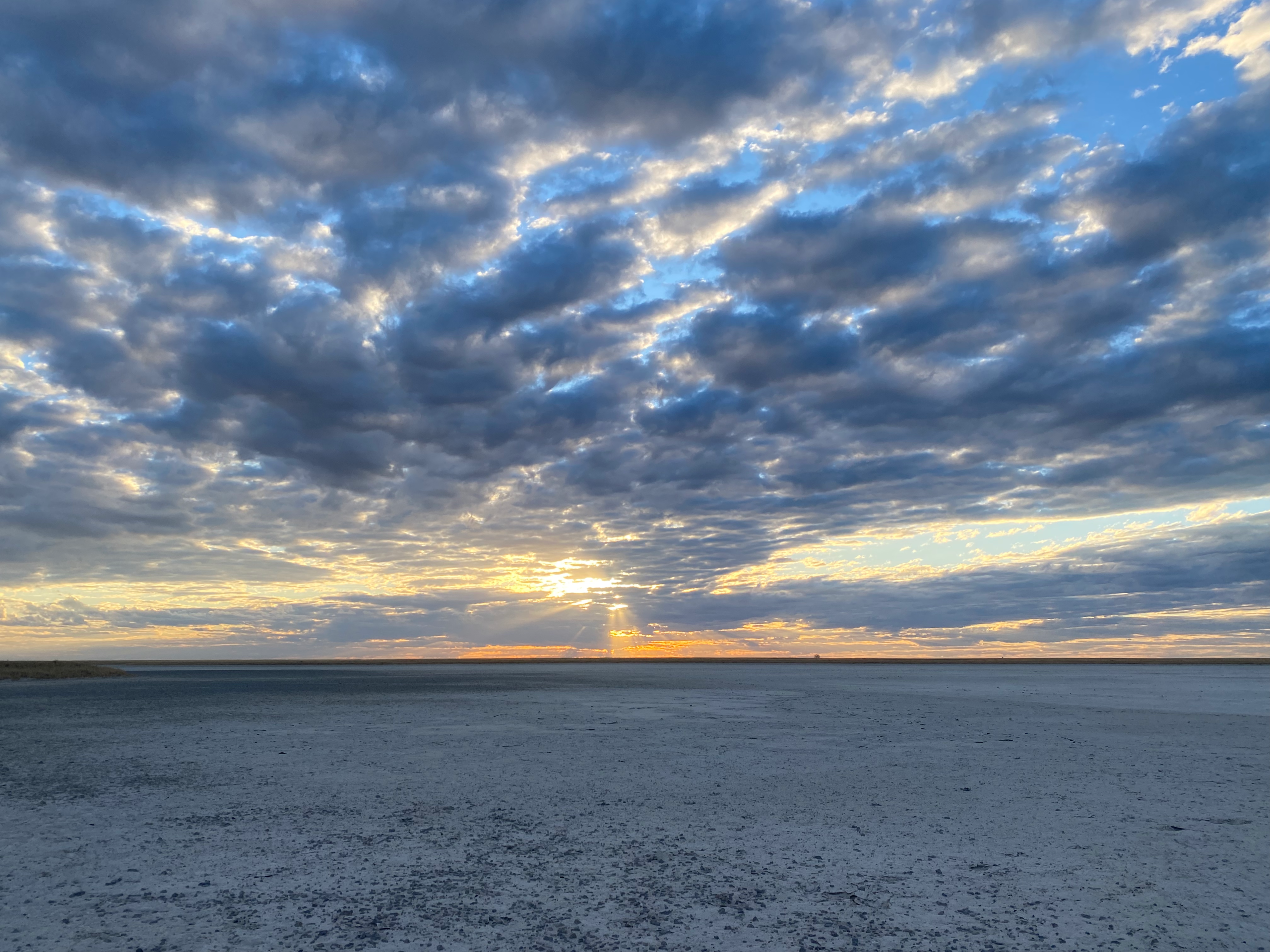
Further south again, the landscape changes entirely. The vast salt pans of the Makgadikgadi and the wider Kalahari offer something the Delta cannot: a stark, open silence beneath enormous skies. This is a landscape of meerkats, quad bike excursions across the pans and evenings spent under some of the clearest night skies in Africa. It is also home to communities of San people, whose knowledge of this unforgiving landscape stretches back tens of thousands of years. A visit here adds a cultural depth that pairs beautifully with the wildlife focus of the north.
When to Go
The Delta’s flood typically arrives between May and August, peaking in the middle of Botswana’s dry season and offering the classic combination of high water and concentrated game viewing. The extensive inundation this year means we anticipate an extended window, and some areas will probably retain water well into the following months. For those planning a visit built specifically around the flood, the coming season offers an unusually generous stretch of time to choose from.
Start to plan your trip
Since 1968, Somak has built journeys around Africa’s great rhythms, the migration, the seasons, and the rains. Botswana has always rewarded that kind of patience, the patience of water finding its way south over months and of a landscape waiting quietly for its moment. This year, that patience has been met in full.
For those who have been waiting for the right season to experience the Okavango at its fullest, from the flooded lagoons of Moremi to the elephant herds of Chobe and the silent expanse of the Kalahari, there has never been a better time than right now! To start planning your own adventure to Botswana, visit somak.com/special_offers, or get in touch with our team directly at holidays@somak.co.uk.
Contact
Somak House
Harrovian Business Village
Bessborough Road
Harrow On the Hill
HA1 3EX
Tel: +44 20 8423 3000
Email: info@somak.com
Opening times
| Mon - Fri | : | 9am to 6pm |
| Sat - Sun | : | Closed |